
Key Takeaways
- A prototype is not a system of record. AI coding tools shorten the path to a working demo, but chain-of-custody documentation, ERP and EDI reconciliation, and audit trails are the parts that never get prototyped, and they are the parts that matter in an inspection or recall.
- The cost shows up on the P&L, not in the build budget. Under-tracked consignment ties up working capital, stockouts cost cases, and every engineering hour spent maintaining a homegrown tool is an hour not spent on the product the company sells.
- Regulatory exposure is the layer most teams miss. Lot tracking, expiration management, and consigned product carry FDA and quality system implications, and the gap between “we track it” and “we can prove we tracked it” tends to surface only in an audit.
- The risk reaches the hospital too. Health systems inherit the operational risk of a manufacturer’s homegrown system without having chosen it, and the result is case cancellations and strained account relationships.
The fastest way to lose track of a consigned tray is to build the system that tracks it in six weeks with an AI coding assistant.
That's not a knock on the engineers who build it. It's a description of what actually happens. An internal team stands up a working prototype fast, because that part has genuinely gotten easier. Then the prototype becomes the system of record for consigned inventory, loaner sets, and lot-level expiration tracking, because nobody scheduled the second project to make it audit-ready. Six months later, it's still the prototype. It just has more data in it now.
A working demo is not a system of record.
That sentence is the whole problem, and it's worth sitting with, because it's exactly the distinction that gets lost when "we'll just build it ourselves" starts sounding cheap. The parts that were always hard about field inventory management don't get easier because an AI assistant wrote the first draft. Chain-of-custody documentation, exception handling at scale, reconciliation against ERP and EDI feeds, defensible audit trails, these are the load-bearing walls of the system, and they're also the parts nobody prototypes.
The Cost You Haven't Priced Yet
Here's where it shows up on the P&L. Untracked or under-tracked consignment inventory ties up working capital that should be funding growth, not sitting in a truck someone forgot to reconcile. Stockouts at the point of care don't just delay a case, they cost the case, and a rep who can't confirm what's in a trunk stock location three states away is a rep who's guessing instead of selling. Every hour an engineer spends patching the homegrown tool is an hour not spent on the product the company actually sells, and that cost compounds quietly for years before anyone puts a number on it. We've broken down where these margin leaks actually hide elsewhere, and a homegrown build touches nearly every one of them.
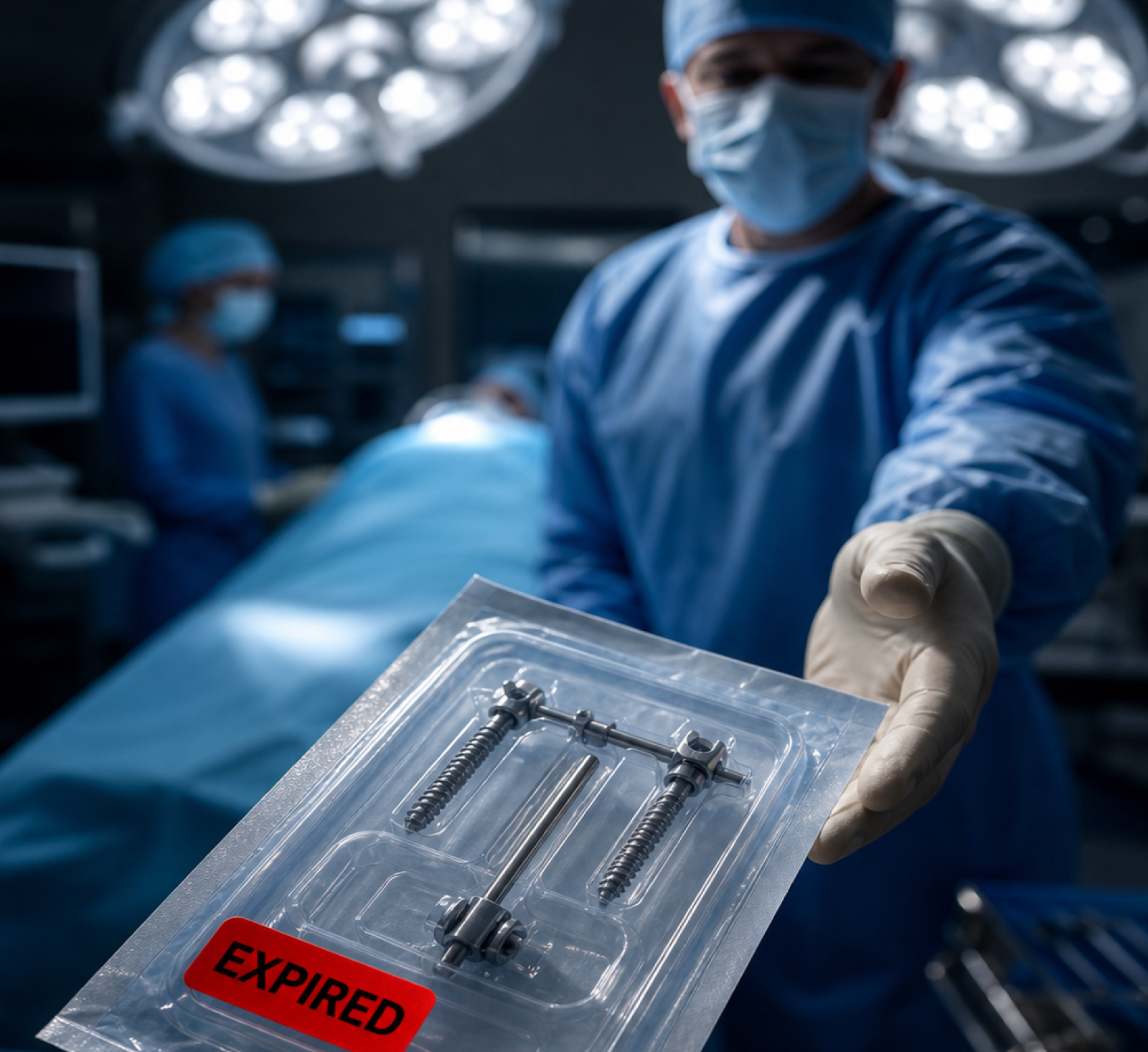
The regulatory exposure is the layer that gets missed until it's too late. Field inventory touches consigned product, lot tracking, and expiration management, all of which carry FDA and quality system implications. A system built quickly, by a small internal team, without the specific discipline this regulatory environment demands, is exactly where the gap between "we track it" and "we can prove we tracked it" opens up. That gap doesn't surface in a demo. It surfaces in an audit, or worse, in a recall, when someone needs a clean chain of custody and the AI-assisted build has none.
This isn't only a device-manufacturer problem. A health system relying on a manufacturer's under-resourced, homegrown inventory system inherits that manufacturer's operational risk without ever having chosen it, the same visibility gap we've documented from the hospital side of the same relationship. Case cancellations tied to missing or misreported consignment stock erode trust in the account relationship long before anyone traces the root cause back to a system that was never built to be a system of record in the first place.
Buying Gets You what Building Can't
None of this means the build option is naive. Large, multi-division device makers with real internal IT capacity have a legitimate case for building. But the total cost of ownership is consistently underestimated, and it's not the build cost that gets missed. It's the maintenance, the feature backlog, the institutional knowledge that walks out the door when the two engineers who understood the AI-assisted build move to a different team.
Movemedical exists because field inventory management is not a side project. It's the system these teams are betting revenue, margin, and regulatory standing on, and it was built for that job from day one rather than retrofitted onto a prototype. A multi-division orthopedic and cranial device manufacturer came to this exact decision after evaluating an internal build: the fastest path wasn't the cheapest one, and the system they needed had to be defensible on day one, not eventually.
If your team is deep in a build-vs-status-quo debate right now, the question worth asking isn't whether you can build it. It's whether you can prove, in an audit, that what you built is what you think it is.
Talk to us about what a defensible system of record actually costs, and what it's costing you not to have one.
About the Author