
Key Takeaways
- Field inventory issues cascade into revenue integrity, compliance posture, and the supplier-hospital relationship, not just operational friction.
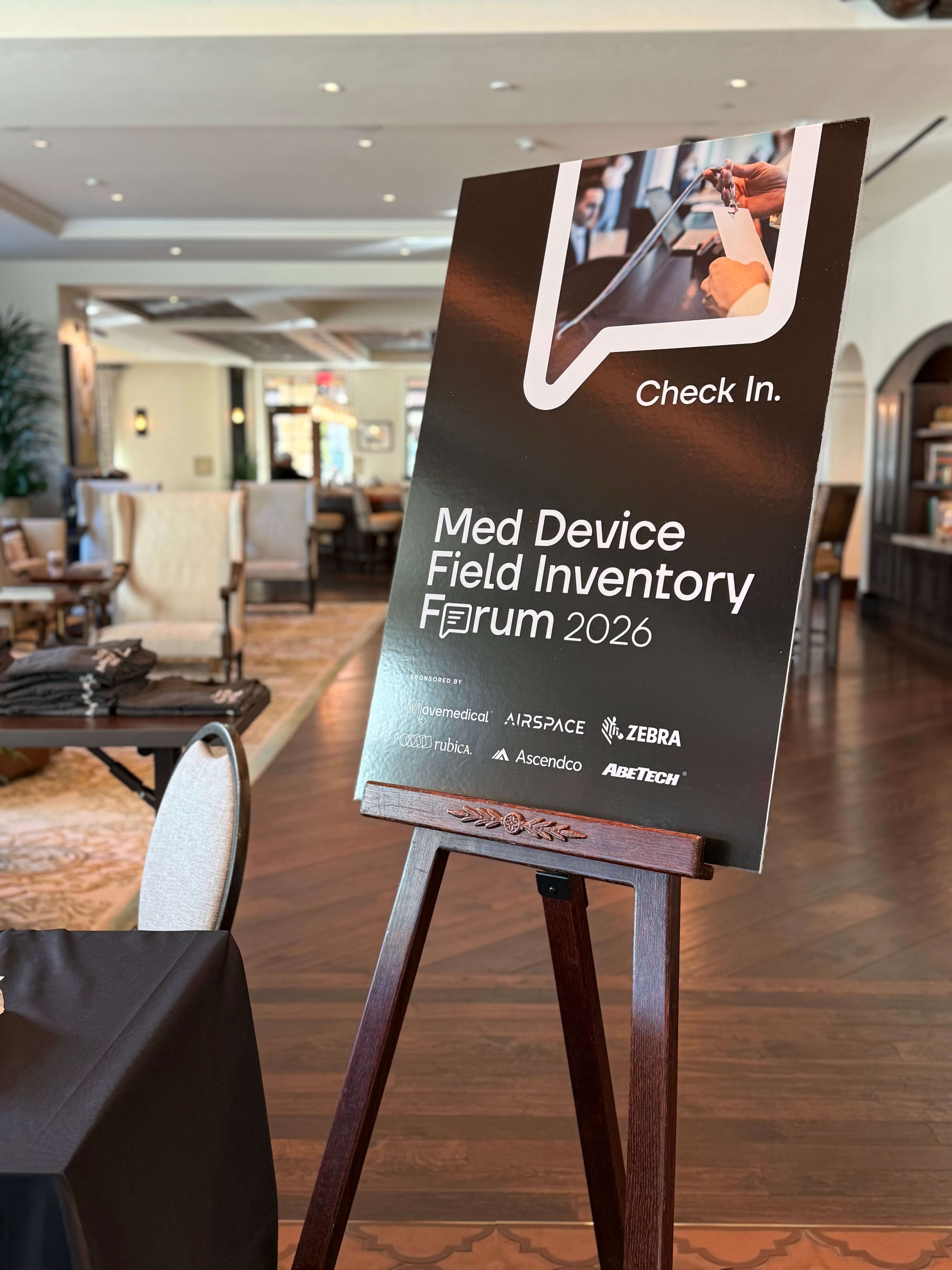
- MDIS 2026 attendees rated the event 9.04/10, and 97% said they'd share their own organization's data ahead of roundtable discussions, a level of candor rare at industry events.
- The 2027 agenda widens beyond inventory alone: a new billing accuracy session ties field discipline directly to margin, and the hospital-supplier panel broadens from PPI visibility to the shared-data relationship overall.
- New hospital solutions built to unify inventory, cataloguing, and billing get a Day 2 vision panel and a Day 3 live look grounded in real customer experience.
- RFID shifts from last year's headline session to a tighter, evidence-based presentation supporting the broader data-standardization story.
- The event pulls in stakeholders beyond operations: finance, IT, sales, and compliance leaders all have sessions built around their specific stake in the outcome.
- MDIS stays deliberately small and non-commercial by design, prioritizing candid practitioner conversation over trade-show scale or vendor pitches.
Ask most health system or med device executives where field inventory sits on their list of strategic priorities. Most will say somewhere near the bottom, below product innovation, market access, and the initiatives that show up in the board deck.
That ranking made sense once. Field inventory looked like a contained, back-office function. It doesn't hold up today because problems in the field rarely stay in the field.
A missed usage capture becomes a billing error. An unreconciled consignment set erodes the trust between a supplier and a hospital. A rep without the right data makes a decision that shows up in revenue, in compliance exposure, and in patient outcomes weeks later.
Field inventory sits at the center of all of this. But the bigger story isn't about inventory in isolation. It's about the hospital. Every one of those consequences, the billing error, the audit exposure, the rep's bad call, eventually lands on the hospital's side of the relationship: on the systems they run, the trust they extend to a supplier, and the outcomes they're ultimately accountable for. Revenue integrity, compliance posture, and sales performance all radiate outward from that one relationship. That's the story we built the Med Device Inventory Symposium to tell.
The Case for a Room of Its Own
Most medical device industry events treat field inventory as a subtopic — one panel wedged between broader supply chain and commercial content, discussed in isolation from the functions it actually affects. The people who manage physical inventory across hundreds of hospital accounts rarely get a dedicated agenda that connects their work to the financial, compliance, and commercial outcomes their leadership actually cares about.
MDIS exists because that connection deserves direct, sustained attention — not a 20-minute breakout on someone else's agenda.
The results back this up. Attendees rated the 2026 event 9.04 out of 10 for overall value. That's not a vanity number. It's a signal that when you give this community a dedicated space — and treat their problem as strategically significant rather than operationally incidental — they show up, engage, and get something out of it they can't get anywhere else.
Why the Room Matters More Than the Agenda
Here's what we've learned running this event for three years: the sessions matter, but the room matters more.
Field inventory sits at the intersection of functions that rarely sit down together — operations, finance, IT, sales, and compliance all have a stake in it, but they usually solve their piece of the problem in isolation. A hospital supply chain director and a device manufacturer's VP of operations are often working the exact same problem from opposite sides of the table, without ever comparing notes. A finance leader chasing billing accuracy and an operations leader chasing audit readiness are often chasing the same root cause without realizing it.
MDIS puts these people in the same room, and something specific happens when it does. In our 2026 post-event survey, 97% of attendees said they'd be willing to share their own organization's data ahead of roundtable discussions — a level of openness you rarely see between competitors and counterparts. That's not a coincidence. It's the result of building an environment where practitioners trust each other enough to talk honestly about what's actually working, instead of defending a position.
The most telling data point from last year: when we asked attendees which session drove the most actionable takeaways, 63% pointed to the RFID and field technology discussion — and the reason had less to do with the specific technology than with the willingness of a competitor to share real implementation data, including what didn't work. That's the cultural DNA MDIS is built on. Not case-studies polished for a stage. Actual operating experience, shared candidly, between people who have to answer for the results.
Why We're Widening the Lens for 2027
Everything we've learned from three years of this event, and from conversations across our own leadership team, points to the same conclusion: field inventory isn't a standalone problem, and treating it like one limits how useful this event can be.
The 2027 agenda reflects that shift. Inventory is still the center of gravity, but the sessions now trace the lines outward to what inventory actually determines:
- New hospital solutions built to transform the whole picture. Day 2 opens with a vision panel on new, groundbreaking hospital solutions taking shape across the industry — solutions built to transform how hospitals manage inventory, cataloguing, and billing together, rather than as three disconnected problems. Day 3 closes with a live look at what that transformation looks like in practice, grounded in a customer's early, real-world experience rather than a concept demo.
- Revenue integrity. Missing usage capture, unreconciled consignment, and catalog errors don't just create operational friction — they show up directly on the P&L. A new session this year puts real financial data in front of the room to make that case explicitly, connecting operational discipline to margin and billing accuracy rather than treating them as separate conversations.
- The supplier-hospital relationship. Physician preference item visibility was last year's framing. This year's panel broadens that into the more foundational question: what does it actually take for suppliers and health systems to operateon shared data, and what breaks — in billing, in compliance, in outcomes — when they don't? Health system leaders sit on this panel as co-presenters, not as the subject being discussed.
- Where AI is genuinely accountable, not just present. The agenda holds a firm line here: AI content is grounded in what's deployable today, with explicit attention to where the accountability and governance questions remainunresolved, including how it touches sensitive case data.
- RFID as proof, not the headline. Last year's most-voted session earns a different role in 2027 — a tighter, evidence-based presentation built around real post-implementation findings, positioned as supporting evidence for the industry's broader move toward standardized data exchange, rather than the standalone story it was last year.
The through-line connecting all of it: the industry is moving toward a model where suppliers and hospitals operate on shared data instead of disconnected systems, and every function represented in this room (ops, finance, compliance, sales, IT) has a stake in how that plays out.
Who Benefits From Being in the Room
This isn't an event built for one job title. Field inventory's reach into revenue, compliance, and partnership means the value looks different depending on where you sit.
Operations and supply chain leaders get direct access to how peers are handling consignment, loaner management, and audit processes — including the parts that don't make it into a case study. This is the core audience MDIS has always served, and the room reflects that depth.
Finance and revenue leaders have a growing reason to be in this conversation. The 2027 agenda draws a direct line from operational discipline in the field to billing accuracy and margin — a connection finance teams feel the consequences of but rarely get to discuss with the people managing the root cause.
IT and systems leaders get a rare, non-vendor-driven conversation about what it takes for supplier and hospital systems to actually connect — a question that's becoming less of a technical detail and more of a strategic constraint as the industry consolidates and data-sharing expectations rise.
Sales leaders have a stake in this conversation whether or not they've historically shown up to it. The field rep's role is shifting from order taker to operational consultant, and that shift only works if sales understands the inventory and data realities their customers are managing.
Compliance, quality, and hospital supply chain stakeholders have a direct interest in the audit, traceability, and shared-data conversations running through the agenda. These aren't abstract regulatory topics here — they're discussed by the people who live with the consequences of getting them wrong, on both the supplier and hospital side.
If your organization touches physical product in the field — or answers for what happens when that product isn't tracked correctly — there's a version of this event built for your seat at the table.
What Makes MDIS Different
A few things set this event apart from the broader conference landscape, and we've been deliberate about protecting all of them.
It isn't a trade show. There's no expo floor to wander, no badge-scanning gauntlet. Every session is built around discussion, not product demonstrations.
It isn't a sales pitch. This has been a firm, non-negotiable principle since day one, and it holds even as the agenda broadens. Sessions are held to a practitioner standard — if it reads like a commercial, it gets cut. That standard is exactly why attendees trust the roundtables enough to share real data.
It's intentionally small. Seats are limited on purpose. The value of this event comes directly from the depth of conversation it makes possible, and that depth doesn't scale to a few thousand attendees. We would rather have a room of the right people than a hall of a few thousand.
It's run by people who understand the problem, not just the market. Movemedical built this event because field inventory — and everything it touches — is the problem we work on every day, not because we identified a content gap to fill. That difference shows up in the specificity of the agenda and the credibility of who's willing to speak candidly in the room.
What's on the Table for 2027
This year's theme, From Operations to Outcomes, reflects where the conversation needs to go next. A few threads attendees can expect to dig into:
- What new, groundbreaking hospital solutions are making possible — a first look at approaches designed to transform inventory, cataloguing, and billing together, plus a live look at how that plays out for a hospital already living it
- Where field operations discipline shows up on the P&L — the direct link between inventory accuracy and billing integrity, told through real financial results
- What it takes for suppliers and hospitals to operate on shared data — and what breaks down, in compliance and in outcomes, when they don't
- Where AI actually helps today — separating real gains in traceability and decision support from the noise, grounded in what's deployable now
- What the next chapter of field technology adoption looks like, built on real post-implementation findings rather than early promises
Reserve Your Seat
MDIS 2027 runs January 13–15 at The Don CeSar in St. Pete Beach, Florida. Seats are limited by design, and they go to the senior leaders ready to bring real problems and real answers into the room.
About the Author