Key Takeaways
- The dividing line is design orientation: built from the rep's workflow, or built on ERP architecture with the field told to adapt.
- Finance-out systems look clean on an integration diagram but don't solve consignment, loaners, or distributed real-time inventory natively.
- The failure modes don't appear in a proof of concept. Batch delays and manual PO matching only surface at scale, after signature.
- Adoption determines return, not ERP compatibility. One evaluated system reportedly raised headcount 25% to manage its own inefficiencies.
The wrong medical inventory management software does more than just frustrate your reps. It bleeds revenue, inflates headcount, and stalls commercial velocity.
Most MedTech companies discover their inventory management problems the hard way: missed cases, billing disputes, or reps repeatedly spending forty-five minutes on manual reservations before a surgery. The instinct is to blame the process. The real culprit is usually the platform.
This pattern has become all too familiar as leading MedTech companies evaluate medical inventory software. A finance-driven, ERP-native system gets endorsed by IT, championed by procurement, and approved by a budget committee that never touches field operations. Then it gets handed to the commercial team, and that's where the problems start.
The Cost of Getting This Wrong
When medical inventory management software fails in the field, reps abandon it. They often cite too many screens, too many clicks, and too many workarounds. When reps stop using the system, data degrades. This leads to operations teams losing inventory visibility. And when operations lose visibility, they add headcount to compensate for and counteract platform deficiencies.
One Director of Supply Chain Optimization at a leading MedTech company put the number plainly: the medical inventory system they evaluated increased headcount by 25% just to manage its own inefficiencies. Multiply that across hundreds of cases per month. Add the revenue latency from slowed Order-to-Cash cycles and batch-processing delays that prevent real-time fulfillment. The cost stops being abstract quickly.
Finance-Out vs. Customer-Back
The dividing line between field-effective and finance-friendly medical device inventory tracking software comes down to design orientation. Was it built starting with the rep's real workflow in mind? Or did they start with ERP architecture and mandate the field to adapt?
Finance-out systems optimize for reporting. They appear to integrate cleanly with enterprise ERP environments on paper. In practice, that integration demands constant, expensive customization to handle the realities of a medical device supply chain: consignment models, loaner kits, real-time inventory across distributed locations. These are problems finance-out platforms don't solve natively, and often don't solve at all without significant professional services spend.
Proof-of-concept environments don't surface these failure modes. Batch processing that delays shipments, manual PO matching that consumes analyst time, live tracking gaps that create blind spots across a distributed field team—these only appear at scale, after the contract is signed.
What Real Medical Inventory Tracking Looks Like
Genuine medical device inventory management is a different problem than financial inventory tracking. A purpose-built medical inventory management system provides piece-level visibility of every SKU—including lot-controlled items inside and outside of kits—with concurrent, real-time processing rather than periodic batch syncs. It also requires a mobile experience that reps will actually use, because a medical inventory tracking system that doesn't get adopted delivers no value.
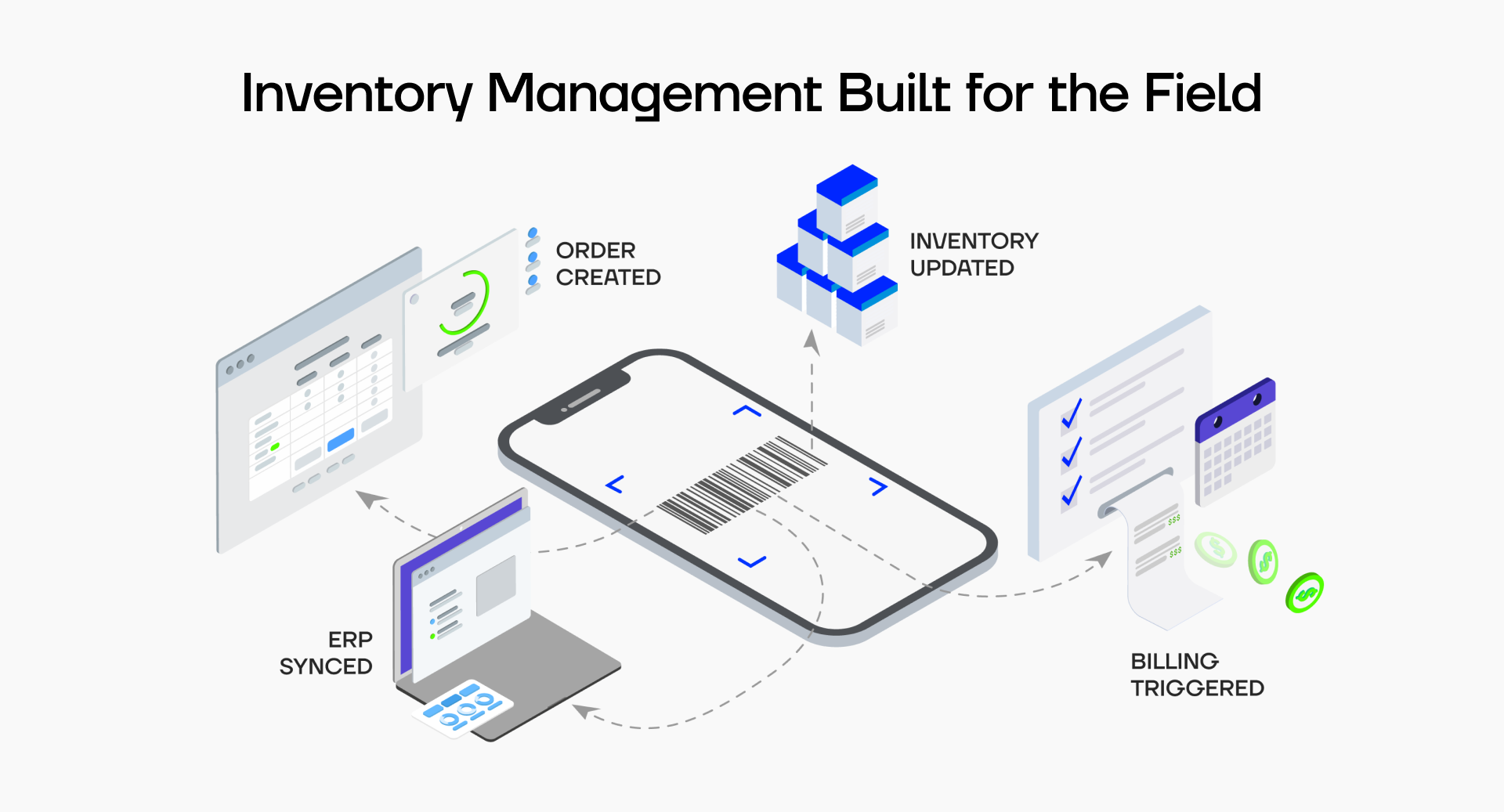
When a top five medical device manufacturer implemented Movemedical nationally, every process that previously required manual intervention was either eliminated or dramatically compressed. Hard allocations, shipping, reservation management, PO matching, and receiving all became automated, optimized processes. Order-to-Cash moved faster. Freight costs declined. The platform became the operational foundation they expanded globally.
Adoption Determines ROI
The most important metric in medical inventory management software isn't ERP compatibility—it's adoption. A system your reps won't use generates no data, no visibility, and no value. Field adoption follows from field-first design: an intuitive mobile interface, frictionless scanning, workflows that reflect how a rep actually operates before and after a case.
Movemedical's native mobile application was built on this premise. Its proprietary camera-based barcode scanner is the only one in the industry capable of reading healthcare barcodes. These aren't minor conveniences—they're what separates a medical inventory management system that gets used from one that gets worked around.
Scale Without Adding Overhead
The right medical device inventory management software scales with organizational complexity without adding overhead. Movemedical's cloud-native architecture supports multiple ERPs simultaneously, hybrid RFID setups, multi-org hierarchies, and machine-learning-driven demand forecasting. Zero-downtime deployments mean upgrades happen without disrupting the field.
One Director of Commercial Operations described the outcome after their national rollout: Movemedical connected their sales force, warehouse management system, and courier network in a single environment. Within the first year, they had already exceeded both field inventory and financial targets.
The Proof Is in the Adoption Numbers
Movemedical operates across complex workflows for more than 10,000 reps actively using the platform globally. The organizations that set the operational standard for the medical device supply chain choose Movemedical because it delivered unique measurable financial value at scale, not because it satisfied a procurement checklist.
The missed case, the billing dispute, the rep burning an hour on manual reservations the morning of a surgery—those aren't process failures. They're platform failures. And they're preventable. Movemedical was built specifically to eliminatethem: purpose-built for field operations, designed for adoption, and proven at the scale of the industry's most demanding organizations. The right medical inventory management system doesn't ask your commercial team to adapt to its limitations. It removes the limitations entirely.
Stop Managing Around Your Medical Inventory Software.
See exactly how Movemedical solves the problems that finance-first platforms can't. Watch a product demo on your own time or schedule a 20-minute executive walkthrough to quantify the financial impact inside your specific organization.
About the Author