Key Takeaways
- Field operations directly influence financial performance. Inventory availability, case execution, usage capture, and billing all affect revenue, margins, cash flow, and the ability to grow efficiently.
- Inventory visibility turns working capital into a growth lever. Knowing where every product is and where it needs to go helps manufacturers reduce excess inventory, prevent stockouts, rebalance assets, and put more inventory to work generating revenue.
- Operational friction creates costs that executives cannot afford to ignore. Manual processes, disconnected systems, and poor field visibility consume sales capacity, delay billing, increase inventory waste, and introduce unnecessary risk.
- Better field execution gives sales teams more time to sell. When reps spend less time searching for inventory, chasing paperwork, and resolving administrative issues, they can focus more attention on surgeons, hospital relationships, and strategic accounts.
- Scale requires a connected operational foundation. Unifying inventory, field workflows, sales operations, and compliance gives leaders the reliable data and execution they need to protect margins and grow without adding unnecessary complexity.
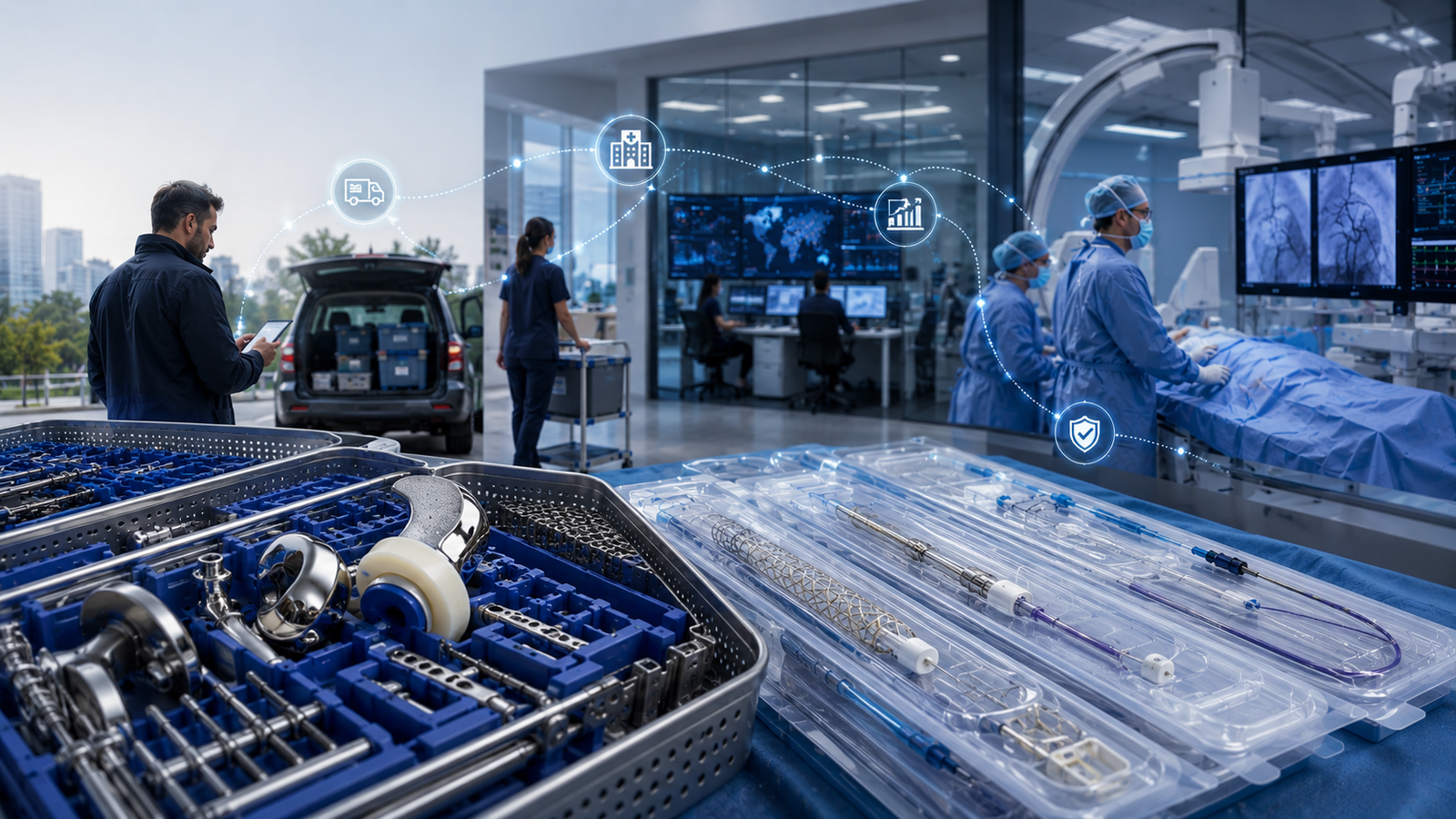
True executive leadership means connecting operational effectiveness directly to top-line growth. To scale efficiently, global medical device manufacturers must bridge the gap between physical field assets and enterprise visibility. That requires moving from reactive firefighting to unified field execution.
For too long, medical device leadership treated field inventory as a back-office utility. It sat below product innovation and clinical trials on the board deck. That old thinking is broken. In modern MedTech, field operations are no longer isolated from financial results. Operational friction in the field directly impacts the revenue growth, P&L, risk profiles, and hospital relationships.
When inventory, case prep, and last-mile logistics live in disconnected tools, spreadsheets or manual text threads, the consequences cascade quickly. A missed usage capture turns into a delayed invoice and an incomplete kit. An unreconciled consignment set triggers a back-office nightmare game of hide and seek. A sales rep buried in administrative work misses the chance to build strategic trust with surgeons.
The commercial teams want to succeed, true leaders enable them to do so.
Driving Top-Line Growth from the Ground Up
Operational effectiveness is the engine of commercial growth. When field inventory is visible, optimized, and automated, the financial impact is immediate.
First, real-time inventory visibility ensures the right product is in the right place at the right time. Predictive analytics and automated replenishment eliminate stockouts and reduce excess carrying costs. Inventory rebalancing tools optimize stock across locations, turning idle capital into active revenue.
Second, automated billing and usage capture protect revenue integrity. By streamlining case prep and closing out procedures instantly from the operating room, companies eliminate billing leaks and speed up cash flow. Finance and operations teams finally speak the same language, tying field execution directly to margin expansion.
Finally, sales enablement shifts dramatically. Freed from administrative drag, commercial teams transition from order-takers to trusted clinical consultants. They can focus on strategic enterprise accounts, deepen hospital partnerships, and accelerate growth across core product lines.
The True Cost of Operational Friction
Every medical device executive knows the pressure to protect margins. Yet, hidden inefficiencies in the field erode millions in top-line value every year.
Consignment and trunk stock is treated as a safety blanket rather than working capital. Excess inventory sits idle in car trunks and hospital closets, tying up capital and expiring quietly out of sight. Meanwhile, manual rebalancing is slow and prone to error. When products are out of position, surgeries stall, and revenue slips away.
Administrative burdens are another quota killer. Sales reps did not enter the industry to log paperwork, looking for inventory, or chase POs. When systems don’t help but rather create friction, productivity drops. Reps spend hours chasing data instead of supporting high-value clinical relationships and results.
Compounding these challenges is the regulatory landscape. Medical device manufacturers operate under strict mandates, including FDA regulations, HIPAA, SOC 2, and ISO 13485 compliance. Managing these requirements across distributed field inventory without a unified system introduces massive liability. A single audit failure or data breach can derail enterprise momentum.
Securing Scale Through Infrastructure
Solving these challenges requires more than a patchwork of point solutions. It demands a purpose-built platform with infrastructure built for the realities of medical device sales, field-ops, supply chain, and logistics.
The Movemedical platform provides that foundation by unifying inventory, sales operations, and compliance into a single source of truth. By combining enterprise-grade security with intuitive mobile workflows, the platform drives an industry-leading user adoption rate. When reps and operations teams use the same tool effortlessly, workarounds disappear, and data integrity follows.
Security and compliance are baked into the core architecture. With robust encryption, role-based access controls, and strict adherence to regulatory standards, the platform protects sensitive data while maintaining airtight audit trails. This gives executive leadership the confidence to scale operations without increasing compliance exposure.
The Path Forward
The future belongs to Medical Device Manufacturers that bridge the gap between field operations and enterprise outcomes. Treating last-mile field ops & supply chain logistics as a strategic growth lever transforms operational discipline into a quantifiable competitive advantage.
By replacing fragmented workflows with intelligent, secure automation, executive leaders can protect margins, ensure flawless compliance, and scale revenue with absolute confidence. The status quo has an expensive invoice. Modernizing field operations is how market leaders drive growth and margin.
About the Author