.png)
Key Takeaways
- The cost of a bad field platform is cognitive load, not just hours. It degrades judgment before it degrades the calendar.
- Purpose-built platforms unify the workflow around the case instead of splitting sourcing, usage, billing, and returns across tools.
- Field-first design plans for dead zones, damaged barcodes, and last-minute changes — offline, with no data loss.
- Industry adoption averages roughly 25%. Movemedical approaches 98%, and adoption gates everything downstream.
- Reps reclaim 10+ hours a week on average — a full workday returned to selling.
For organizations evaluating medical device inventory management software or medical inventory tracking software, the conversation often starts with operations. But the real transformation happens in the field.
Instead of managing relationships and creating cases, many field reps find themselves:
- Managing consignment and trunk stock across dozens of locations
- Tracking expiring inventory under time pressure
- Reconciling audits in hospital basements with poor signal
- Chasing down POs after a case
- Calling customer service to fix preventable issues
- Manually entering data into multiple disconnected systems
The stress isn’t just time. It’s cognitive load. And when overly complex systems and manual workarounds make the job harder, cases get dropped, data degrades, operations suffer, and patients don’t get the care they need.
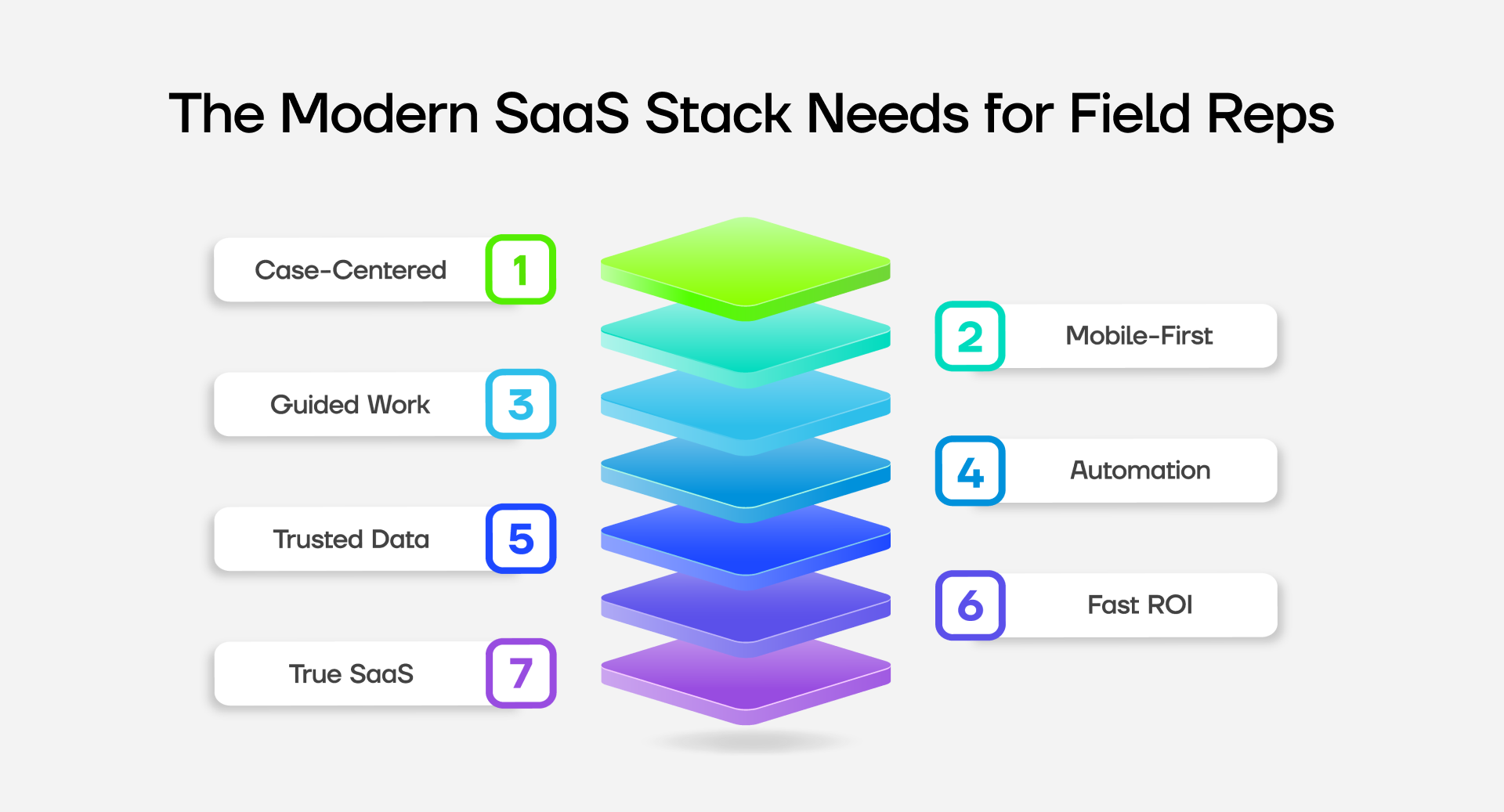
Modern SaaS changes that when teams leverage a platform built specifically for the field. Here are 7 ways purpose-built SaaS transforms the med device field rep experience and drives measurable operational excellence.
1. It Organizes the Chaos Around the Case
For a field rep, everything revolves around the case. Sourcing inventory, managing schedules, usage capture, billing, and returns all tie back to procedures happening at a specific time, in a specific place, for a specific patient.
Yet most systems treat these workflows as separate transactions across different tools.
That fragmentation creates friction:
- Orders placed in one system
- Usage captured on paper
- Transfers managed via email
- Expirations tracked in spreadsheets
- Reconciliation handled days later
Purpose-built medical inventory management systems unify those workflows around the case lifecycle.
Case requests generate orders automatically. Usage is captured instantly in the OR and escalates pending POs. Inventory visibility updates in real time. Transfers, returns, and billing are linked to what actually happened.
Instead of chasing information, reps see the full picture instantly. This reduces mental overhead and eliminates preventable mistakes.
This isn’t just an integration. It’s workflow coherence.
2. What Field-First Design Means in Practice
Most enterprise systems are designed for finance or warehousing and later “extended” to field users.
That rarely works in the field.
Sales reps operate in dynamic, imperfect environments:
- Hospital Wi-Fi cuts out
- Barcodes are damaged or inconsistent
- Cases get added or changed last minute
- Products are known by shorthand names, not SKU codes
When office-based software doesn’t account for that reality, reps are often forced to find workarounds. This makes organizations dependent on individual rep resilience and heroics, neither of which are scalable.
Purpose-built platforms account for what can go wrong in an imperfect world with features and functionality that include:
- Native mobile barcode scanning using proprietary camera-based algorithms
- Offline functionality with no data loss
- “Guess mode” for healthcare barcodes
- Ability to search products the way reps speak about them
- Lot-level and piece-level tracking — even inside kits
When the system reflects how reps actually work, adoption climbs — not because it’s mandated, but because it removes friction. And high adoption is the foundation of everything that follows.
3. It Directs Work Instead of Just Recording It
Legacy systems are passive and reactive, at best. They log activity. They store and react to moments captured in time. And for a time that worked! But modern medical device reps need medical device inventory management software that is active and predictive.
When field data is connected in real time across inventory, usage, scheduling, ERP, and shipping the system can:
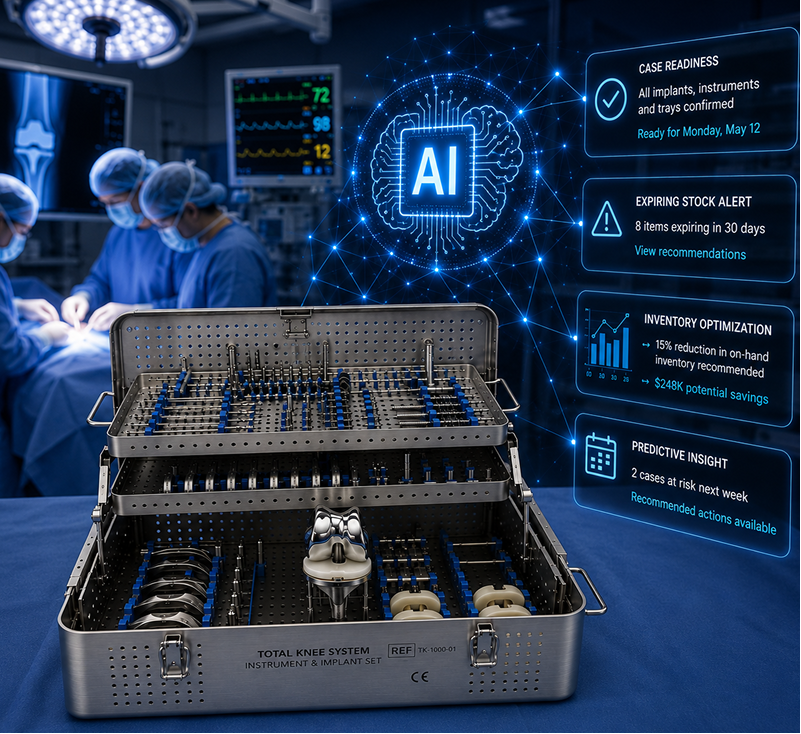
- Alert reps before inventory expires (30/60/90-day views)
- Recommend optimal par adjustments
- Flag delayed POs tied to specific cases
- Identify forgotten transfers
- Predict likely source locations for misplaced inventory
- Automate replenishment requests
That shift from manual reaction to guided action dramatically reduces stress. Reps stop wondering, “Am I missing something?” Instead, their supply chain management software tells them what matters most in their role that day.
Directed workflows reduce errors, shorten billing cycles, and improve asset utilization, all while giving field reps the control they crave when managing their cases.
4. It Eliminates the Work Reps Never Signed Up For
Ask any rep what drains their time. Any rep will tell you it’s not the selling part of the job.
The main drains of time for med device field reps are:
- Sticker sheets
- Duplicate data entry
- Standing in line at shipping counters
- Reconciling inventory variances manually
- Emailing back and forth about transfers
- Tracking down inventory discrepancies
Purpose-built SaaS removes those tasks at the source.
- Usage capture becomes mobile scanning — even offline
- Shipping labels generate automatically with carrier integration
- Transfers happen in-app, without PDFs
- Audit reconciliation triggers automated outcomes
- Returns can be created from a phone
Across partners, reps reclaim 10+ hours per week on average. That’s not marginal efficiency. That’s a full workday redirected toward selling and customer service.
When manual burdens drop, morale rises. And when morale rises, retention improves.
5. It Drives Adoption that Turns Data into Strategy
Industry-wide adoption for medical inventory management tools averages roughly 25%, even when organizations have invested in medical inventory software.
Movemedical has seen adoption rates approach 98%. When that level of buy-in is reached among field teams, something powerful happens:
- Inventory visibility becomes trustworthy
- Case coverage data becomes accurate
- Usage capture becomes consistent
- Expiration risk becomes predictable
- Forecasting improves
Adoption isn’t about login rates. It’s about whether the processes that should occur inside the system actually do. It's about whether or not the systems you’ve implemented actually help reps complete their “jobs to be done.”
When the field trusts the platform and the platform makes the right behavior the easiest behavior data becomes an asset instead of an afterthought.
That’s how organizations move from reactive cleanup to proactive optimization.
6. It Delivers Fast, Measurable Time to Value
Field inventory transformation doesn’t need to mean multi-year rebuilds. When a platform has 20+ ERP integrations, support for 14M+ surgeries, modular functionality that aligns to field activity, and proven enterprise deployments over multiple continents teams can confidently implement around existing workflows rather than having to rebuild it all from scratch.
The results speak for themselves across global partners:
- 10x ROI within the first year
- 35% improvement in return on inventory assets
- 69% reduction in write-offs
- 31% reduction in last-mile shipping costs
- 15 days faster order-to-cash
Time to value accelerates when you don’t force reps to change how they think — only how easily they execute.
7. It Evolves With the Business — Because It’s True SaaS
Medical device organizations aren’t static. They make strategic acquisitions, expand globally, add product lines, and navigate regulatory shifts, among other strategic undertakings in the name of gaining competitive advantage. A cloud-native, microservices-based SaaS platform supports that change with:
- Zero-downtime deployments
- Continuous product updates
- Configurations that don’t block future upgrades
- Deep ERP, CRM, and clinical ecosystem integration
- Native RFID and advanced scan capabilities
When the platform continuously improves, the field benefits immediately.
And when the field benefits, operations stabilize. This isn’t a one-time implementation. It’s an evolving operational backbone that moves the organization forward.
The Bigger Shift: Rep Experience as a Strategic Lever
When field users want to use the system, they will. And when that happens:
Adoption → Automation → Data → Insight → Optimization
Making the rep’s life easier isn’t a soft initiative.
It’s a strategic one. Because when reps:
- Have instant visibility
- Trust their inventory data
- Resolve issues autonomously
- Capture usage accurately
- Spend less time on admin
The entire enterprise wins.
Winning teams see lower write-offs, faster billing, better asset utilization, stronger compliance, improved customer relationships, and (most importantly) better patient outcomes. The difference between traditional systems and modern medical inventory tracking software is not just usability — it’s design philosophy. A true medical inventory management system connects the medical device supply chain from the rep’sphone to the ERP, ensuring that inventory tracking, usage capture, and replenishment all happen inside one intelligent medical inventory system.
Operational excellence doesn’t start in the warehouse. It starts in the field.
And when you build from the rep out, battle-test at global scale, use real field data to direct work, deliver measurable ROI quickly, and continuously improve through true SaaS…
You don’t just digitize inventory. You reset the standard for how medical device organizations empower their field teams. If you want to reset the standard for your field team watch our demo or get a live call today to get started.
About the Author