
When a medical device company decides to build its own operations platform, the conversation almost always starts the same way: we can get 80% of the functionality for 20% of the cost. It sounds like responsible leadership. It sounds like the right question to ask. In regulated, mission-critical environments, it is neither. It is a liability that compounds the longer it goes unexamined.
The math looks attractive on a spreadsheet. It falls apart in the field, in compliance audits, and in the boardroom when something goes wrong with patient data.
80% of an airplane can't fly. And if it can't fly, it doesn't matter what you spent building it.
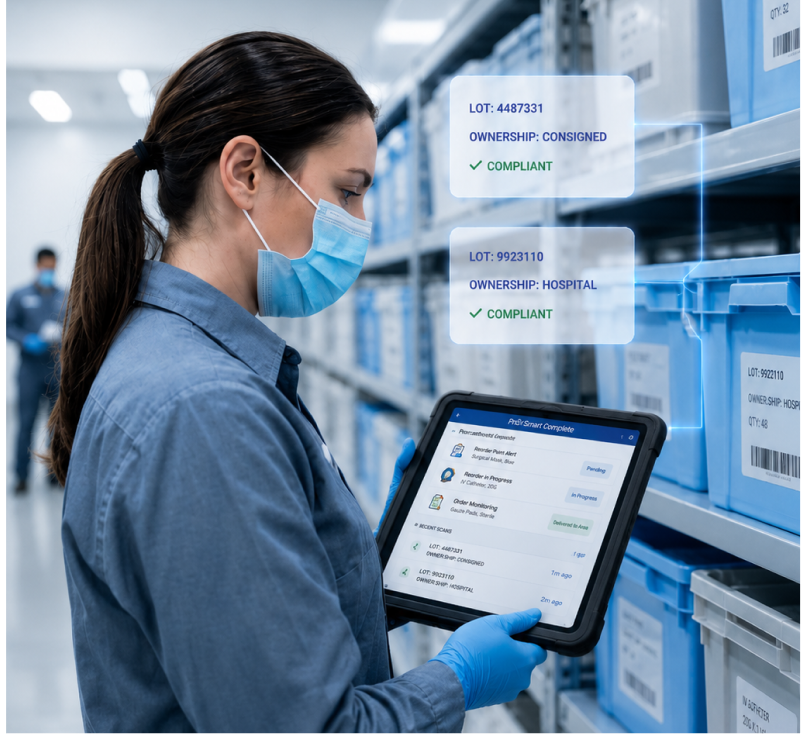
No one buys 80% of a Boeing 737 at 20% of the cost because it can’t transport a single passenger. That’s not a bargain. It is a non-functional asset with full liability attached. The same logic applies to the platform you choose to manage your field inventory, surgical case workflows, and consignment trays across hundreds of hospitals.
The AI Tailwind Makes the Argument More Compelling and More Dangerous
Modern AI tools make the argument easy to believe. Spin up a small team, deploy on cloud infrastructure, approximate the core functionality, and skip the six-figure platform contract. For a budget-conscious executive, that logic is hard to dismiss outright.
What that calculation misses is the starting point. Companies like Movemedical have spent nearly two decades building a field inventory management platform that is more than features. It’s the compliance architecture, domain expertise, and operational hardening that make a supply chain management platform safe to run at scale. As fast as an internal team can build, the gap widens rather than closing. While a new team is getting version one into production, Movemedical is already shipping agentic workflows on top of a certified foundation.
You are not comparing build cost to license cost. You are comparing a starting point to a two-decade head start.
What You Are Actually Signing Up to Build
The 80% functionality estimate typically emphasizes development time and initial headcount. It rarely captures what comes after initial deployment. Owning a production platform in the medical device space means owning the full software development lifecycle permanently. That means dedicated engineering teams as a permanent operational function, not a one-time project. It means cloud infrastructure costs that compound with scale across AWS, Azure, or GCP. It means product management, QA cycles, security reviews, training documentation, and incident response. And it means additional compliance certifications like HIPAA, FDA, and HiTrust as a continuous organizational discipline.
HiTrust certification does not live in a codebase. It permeates every department, every process, and every employee. You can’t generate it with a prompt or inherit it from a vendor. You have to earn it and sustain it. For most medical device companies, absorbing that operational burden permanently is not a cost savings. It is a structural distraction from the business they are actually in.
AI Can Write Code. It Cannot Be Accountable for It.
Code writing is where the build over buy argument becomes genuinely risky. In a world where AI can generate functional code faster than ever, it’s tempting to believe the compliance and accountability gaps will close on their own. They will not.
If you leak patient data and go back to the AI that wrote the code, it will say “I'm sorry.” That is a serious problem when regulators are asking who owns the system. Every major AI coding assistant carries a disclaimer before you begin: AI can make mistakes. That disclaimer exists because accountability has not transferred. When a HIPAA violation occurs, regulators won’t ask who wrote the code. They will ask who owns the system. The answer will be you.
There is also the question of long-term system integrity. AI systems are probabilistic, not deterministic. They drift when inputs shift, when edge cases accumulate, and especially when the developers who built and maintained the rule sets turn over. A small team controlling a set of AI agents is a key-person risk masquerading as a cost-saving technology solution. When one of those developers leaves, so does the institutional knowledge governing how the system behaves.
The Real Cost Comparison
A realistic build scenario might involve five engineers at a fully loaded cost of roughly one million dollars annually. Add in cloud infrastructure, project and product management overhead, security certification work, compliance governance, and documentation and the cost of the internal field inventory software platform quickly approaches the cost of an established solution, without the compliance posture or domain expertise.
Version one might look promising. But version one is not a production system. Hardening to production quality, achieving certifications, managing the system at scale, and absorbing every subsequent improvement is where the real investment begins. This becomes a permanent commitment that competes directly with your core business priorities.
Cost-oriented thinking asks: what does this save today? Value-oriented thinking asks: what does failure cost us? In medical device operations, those are not the same question.
The Case for a Deterministic Foundation
Movemedical's medical device inventory management platform represents nearly two decades of investment in the problems that emerge when medical device operations scale. That investment encompasses thousands of fields, millions of lines of deterministic, tested, certified code, SOC 2 and HiTrust certified, and global deployments in markets with varying regulatory environments.
That foundation is not just about what the platform does today. It’s about what it guarantees tomorrow: a clean audit trail, a credible security posture, and a stable system of record on which AI capabilities can be trusted to perform.
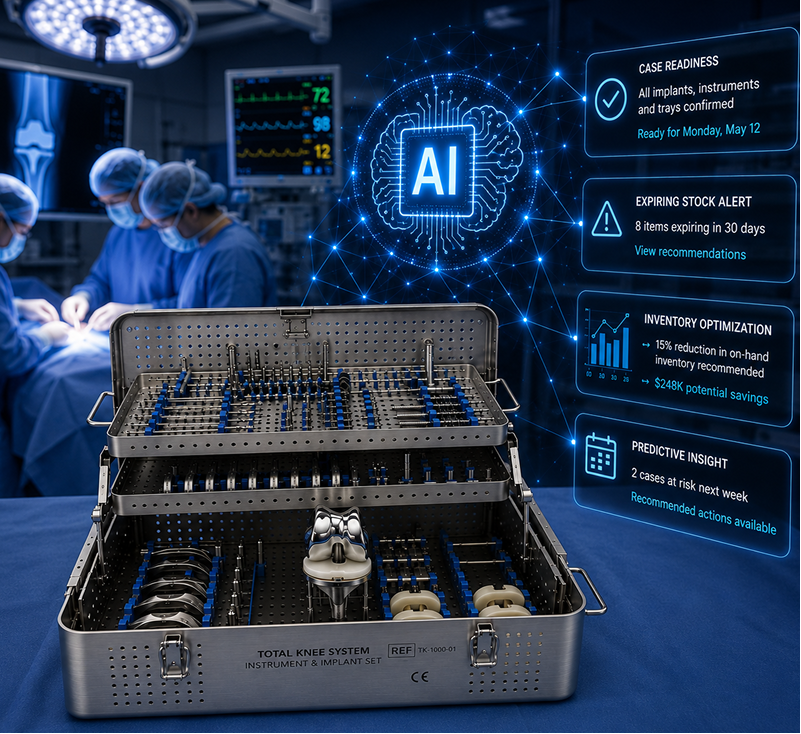
The AI agents running inside Movemedical are not generic tools pointed at generic data. They are trained with two decades of domain context on workflows, edge cases, compliance requirements, and field realities that can only come from operating at scale in this industry. An AI agent built on that foundation, and one built by a developer opening a new tab are not equal.
The Question Worth Asking
The right question is not whether you can build something that looks like 80% of the desired solution. With modern tools, the honest answer is probably yes. The questions that matter are whether what you build meets the compliance standard required for holding patient data, whether you can sustain it at scale, and whether creating and maintaining a software platform is the best use of your organization's IT and development resources.
The companies that have tried building their own medical device operations platforms have largely learned this singular lesson: getting to production is one milestone. Staying there is a fundamentally different challenge.
Eighty percent does not clear that bar. And in this industry, the cost of falling short is not a failed project. It compromises patient data, adds regulatory exposure, and erodes commercial relationships that took years to build.
See what two decades of medical device domain expertise looks like in practice.
Schedule an executive walkthrough with Movemedical to see how leading MedTech organizations have made the build vs. buy decision — and what it meant for their compliance posture, field performance, and revenue visibility.
About the Author