Key Takeaways
- Delay is a revenue problem, not a scheduling one. Every system handoff adds days between surgery and invoice.
- Orchestration beats integration. One demand signal should run sourcing through billing with no re-entry — scanned once, billed once.
- The gains are cycle-time gains. 30–55% fewer shipments per case, PO-to-cash 15 days faster, order-to-cash roughly halved.
- Movemedical connects the full field inventory lifecycle, so sales, ops, and finance work one record instead of reconciling three.
In MedTech, every delay costs more than time. It costs trust, margin, and sometimes patient care. Yet most medical device companies still run critical field operations on slow, manual processes, where case scheduling, order creation, shipment tracking, and billing all happen in disconnected systems.
That fragmentation turns daily operations into a constant firefight of chasing approvals, reconciling shipments, and re-entering data that should already be connected.
Movemedical eliminates that drag. Our medical equipment inventory management software connects the entire process from demand signal to delivery to revenue recognition, so work moves forward without waiting. And trust builds without setbacks.
What Automation Actually Removes from the Cycle
The future of MedTech isn’t just digital. It’s automated.
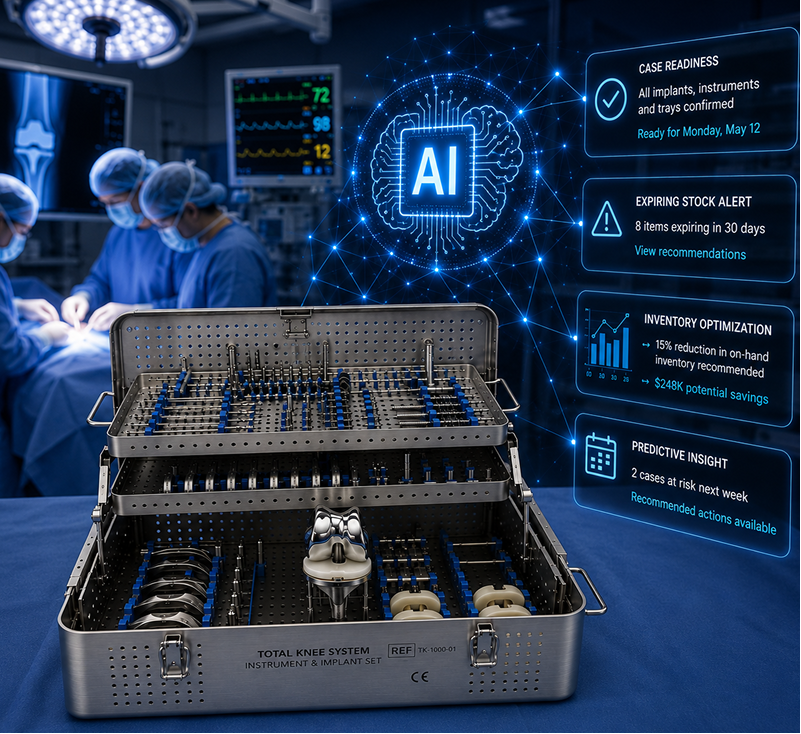
Movemedical was built to scale the repeatable work that would otherwise slow teams down; powered by clean data, operational context, and intelligent workflows that keep the field, warehouse, and back office perfectly in sync.
Every scan, shipment, and billing event happens automatically, turning what used to be manual heroics into seamless performance. As the industry’s most advanced medical equipment inventory management software, Movemedicalautomates every step of the field inventory lifecycle with precision and reliability.
Our customers use our proprietary automation across their field inventory lifecycle to:
- Accelerate order-to-cash with instant usage capture and billing auto-match.
- Shrink freight costs and turnaround times through consolidated shipping and carrier automation.
- Increase surgical readiness with predictive sourcing and kit optimization that ensures the right products arrive the first time.
- Eliminate rework and idle inventory with proactive replenishment and exception-based workflows.
When scaled systems handle predictable tasks, people can focus on driving value by serving physicians, supporting patients, and growing the business.
Shorter Cycles. Faster Revenue. Fewer Fire Drills.
For Sales, Ops, and Finance teams alike, the impact is immediate:
- Reps get time back with automated requests, case matching, and instant billing triggers.
- Operations runs leaner with smart replenishment and exception-based alerts that eliminate routine status checks.
- Finance closes faster as orders, shipments, and usage automatically align—no waiting weeks to reconcile or collect.
What once took days now happens in minutes. Revenue recognition speeds up. Freight costs drop. Field inventory turns faster.
Customers consistently report 30–55% fewer shipments, 15-day faster PO-to-cash cycles, and smaller teams handling more surgeries without burnout.
Streamlining the Field Inventory Process
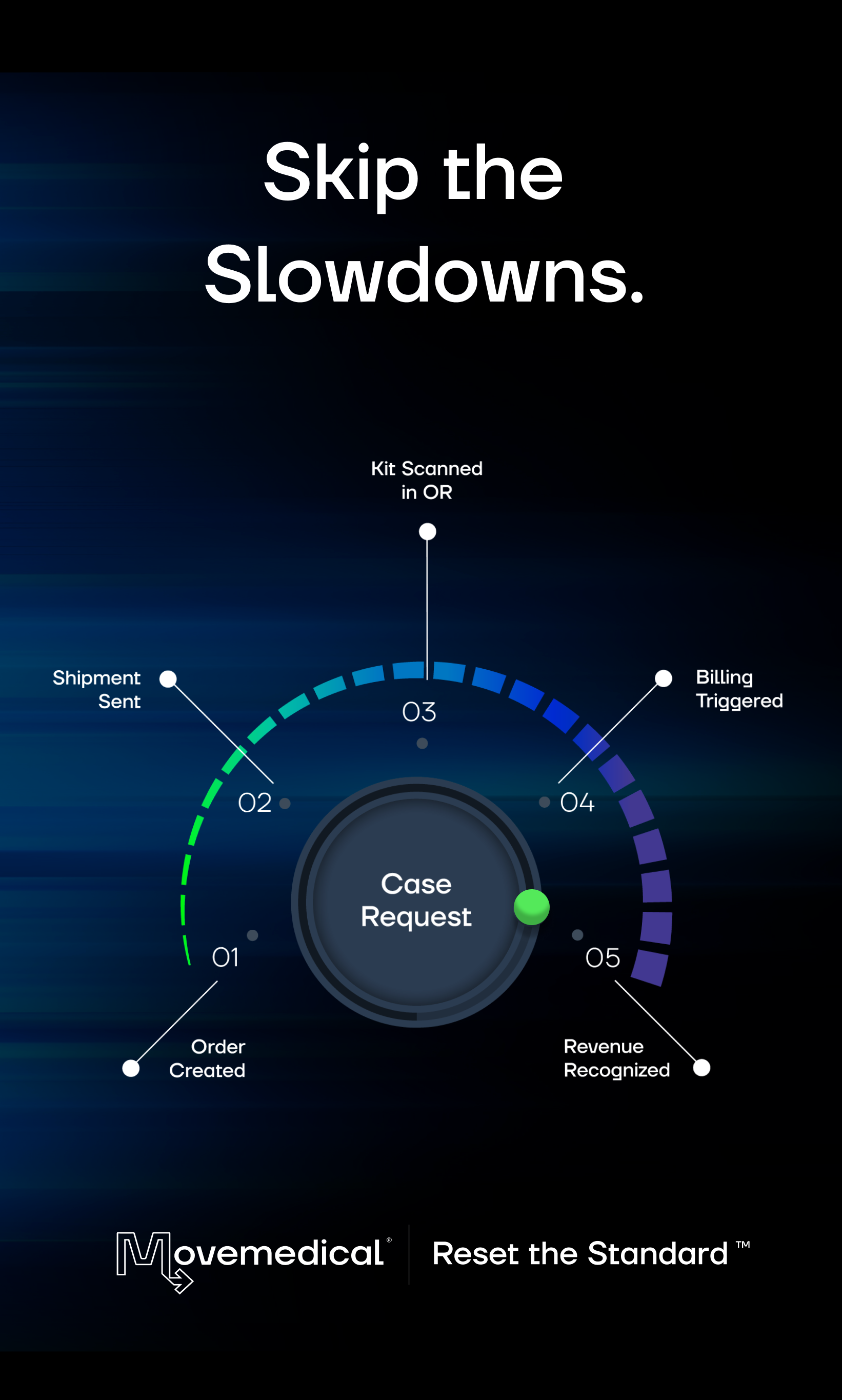
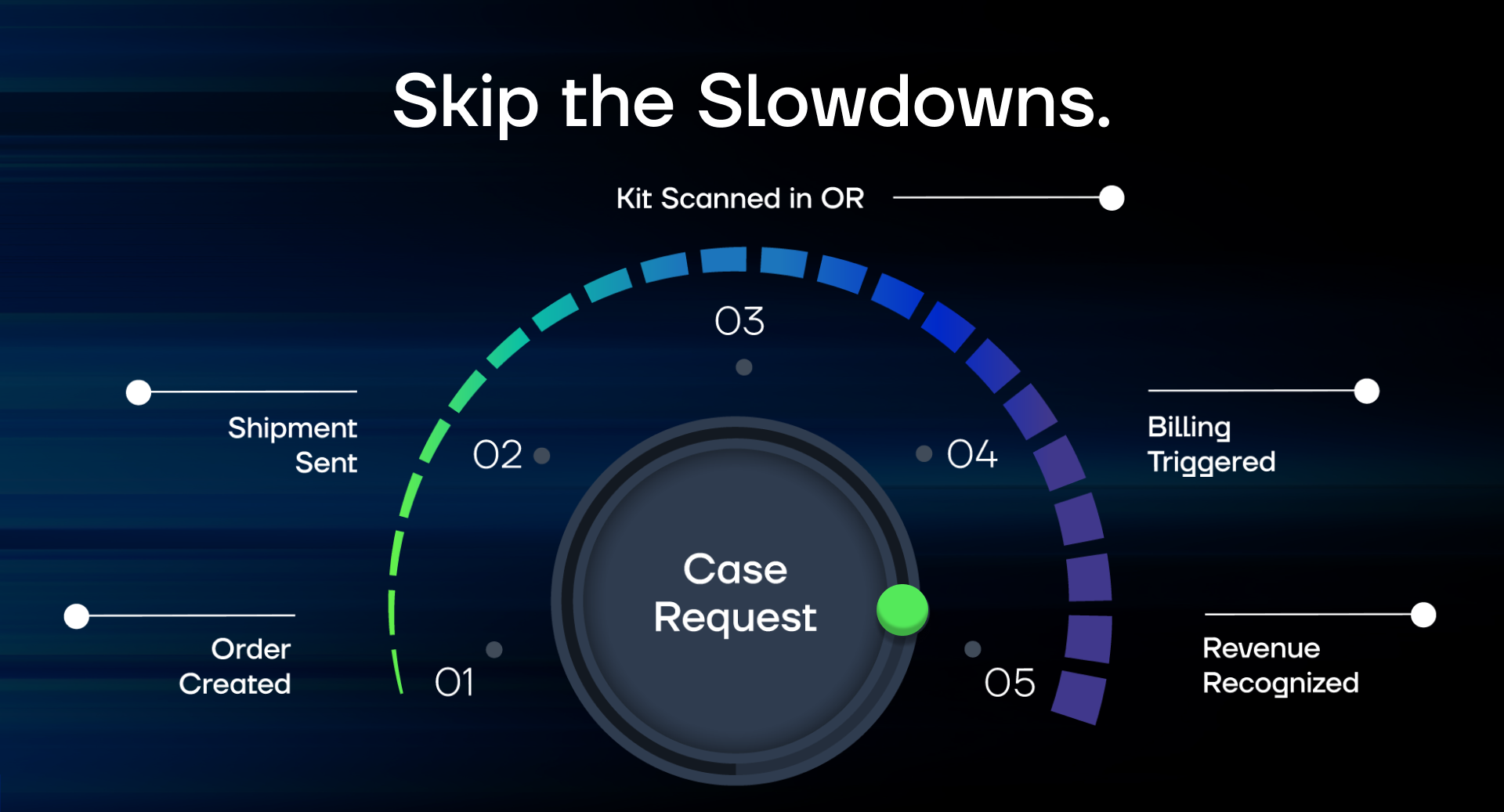
The core advantage of Movemedical’s automation that sets our medical inventory tracking system apart is orchestration. Each workflow—from a rep scanning usage in the OR to a shipment leaving the DC—is tied to a single source of truth.
That orchestration powers a faster, cleaner cycle:
- Demand Signal → Automated Sourcing: Preference cards and predictive logic translate clinical needs into orders instantly.
- Fulfillment → Delivery: Smart routing, freight consolidation, and live tracking eliminate manual follow-ups.
- Usage → Billing: Scanned once, billed once—no re-entry, no lost revenue.
- Return → Replenish: Reverse logistics close the loop automatically, keeping assets in circulation instead of stuck in the field.
It’s a closed, continuous flow—so instead of scrambling to catch up, your teams stay ahead.
Built to Scale Without the Stress
Slow systems breed burnout. Fast, intuitive automation builds momentum. Because Movemedical functions as a unified medical inventory management system, every department operates from the same data, reducing friction between Sales, Ops, and IT.
We built Movemedical from the rep out and from the ground up because we know that field adoption stays high across every role—sales, ops, finance, and IT, when everyone works from one connected platform, without extra training or manual intervention.
The results are measurable and repeatable:
- Order-to-cash cycles cut by half
- 50%+ fewer shipments per case
- Higher surgical-ready rates and fewer stockouts
- 98%+ user adoption across global deployments
Movemedical doesn’t just make workflows faster—it makes them reliable, explainable, and scalable.
Speed Isn’t About Going Faster. It’s About Eliminating Friction
The fastest companies aren’t the ones who work harder. They’re the ones whose systems do the work for them. They win by leveraging medical inventory software to eliminate friction, automate complexity, and accelerate growth. In other words, they use Movemedical.
Movemedical’s automation replaces the lag between systems, teams, and steps with continuous motion. From the first case request to final payment, every workflow runs cleanly—no waiting, no rework, no slowdown.
Skip the slowdowns. Close faster. Deliver sooner. Grow smarter.
Movemedical. Reset the Standard™.
Ready to see how leading MedTech companies are using medical device inventory management software to eliminate delays and accelerate growth? Watch our demo here.
About the Author